Bangladesh doesn’t get anywhere near the tourism attention it deserves. Most travelers still picture flooded rivers and crowded cities, and miss the part where this country has the longest unbroken sea beach on the planet, one of the largest mangrove forests left on Earth, tea gardens that roll on for miles, and hill tracts that feel more like Southeast Asia than South Asia. This guide covers the places worth building a trip around, why each one earns its spot, and what you should know before you go.
Read more: 15 Tips for Traveling to Bangladesh
Dhaka
Dhaka is where almost every Bangladesh trip starts, and it’s worth giving it more than a single layover night. Old Dhaka, in particular, is one of the most atmospheric urban districts in South Asia.
Main attractions: Lalbagh Fort, an unfinished 17th-century Mughal fort complex, sits in the old city and gives a good sense of Dhaka’s Mughal-era history. Ahsan Manzil, the pink palace on the Buriganga River, was once the residence of the Nawab of Dhaka and now houses a museum. Star Mosque (Tara Masjid), with its mosaic star patterns, is a short walk from there. For a completely different pace, take a rickshaw or short boat ride through Old Dhaka’s narrow lanes around Shakhari Bazar and Sadarghat, where the river traffic alone is worth the trip.
Best time to visit: November through February, when the heat and humidity ease off. Dhaka in April and May can be brutally hot.
Who it’s best for: History-minded travelers, photographers, and anyone who wants to understand the country before heading out to the coast or the hills. It’s less suited to travelers looking for a relaxing pace – Dhaka’s traffic is genuinely one of the worst in the world, so build in extra time for getting around.
Cox’s Bazar
Cox’s Bazar is usually the first name that comes up in any conversation about Bangladesh beaches, and it’s famous for one specific reason.
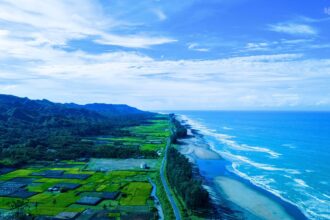
Why it’s worth visiting: the unbroken beach here stretches roughly 120 kilometers, commonly cited as the longest natural sea beach in the world. That length is the whole point – you can walk for hours without running into a resort wall or a rocky point breaking up the sand.
Main attractions: the main beach stretch near Laboni Point and Sugandha Point gets busy, especially with domestic tourists, but a short drive south takes you to quieter stretches like Inani Beach and Himchari, which has a small waterfall and viewpoints over the coastline. Boat rides out to the coral island of Saint Martin’s typically depart from here or from nearby Teknaf.
Best time to visit: November to March. The Bay of Bengal gets rough during monsoon season (June to September), and cyclone risk is a real factor along this coast, so avoid the mid-year months if you can.
Who it’s best for: families, beach-focused travelers, and anyone wanting an easy add-on to a Dhaka trip. It’s a well-developed tourist zone with a wide range of hotels, so it works for both budget and higher-end travelers.
Saint Martin’s Island
If Cox’s Bazar is Bangladesh’s most developed beach destination, Saint Martin‘s is its most remote one – a small coral island near the Myanmar border, reachable only by boat.
Why it’s worth visiting: it’s the only coral-bearing island in the country, with clearer water than anything on the mainland coast and a slower, fishing-village pace of life.
Main attractions: cycling or walking around the island’s perimeter, snorkeling near the reef areas, and watching the sunset from the western side facing the open bay. The island is small enough to cover on foot or by rented bicycle in a day.
Best time to visit: November through February. Boat services to the island are frequently suspended during monsoon season due to rough seas, and access can be restricted depending on the season, so check current ferry schedules before planning a trip.
Who it’s best for: travelers who want a genuine slow-down after the pace of Dhaka, and anyone interested in marine life. It’s not the destination for travelers who need reliable electricity or fast internet – infrastructure here is basic by design.
Sundarbans
The Sundarbans is the largest mangrove forest in the world, shared between Bangladesh and India, and the Bangladesh side holds the larger portion of it.
Why it’s worth visiting: this is the only place to see the Royal Bengal Tiger in its natural mangrove habitat, along with saltwater crocodiles, spotted deer, and an enormous range of bird life. It’s also a UNESCO World Heritage Site, recognized for the scale and ecological importance of the mangrove ecosystem.
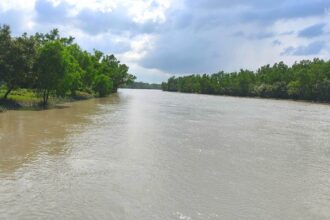
Main attractions: multi-day boat cruises through the forest’s tidal channels are the standard way to experience it, usually departing from Khulna or Mongla. Tiger sightings are rare and never guaranteed, but the boat trips themselves, gliding through narrow waterways lined with mangrove roots, are the real draw.
Best time to visit: November to February, when the weather is dry and comfortable for multi-day boat travel.
Who it’s best for: wildlife enthusiasts and travelers comfortable with a slower, nature-focused itinerary. This isn’t a day trip – plan for at least two to three days if you want a proper cruise, and book through a registered tour operator, since permits are required to enter the forest.
Bagerhat
Bagerhat sits on the way to or from the Sundarbans and holds one of Bangladesh’s most significant historical sites, making it an easy and worthwhile stop to combine with a mangrove trip.
Main attractions: the Sixty Dome Mosque (Shat Gombuj Mosque), a 15th-century mosque built by the Turkish general Khan Jahan Ali, is a UNESCO World Heritage Site and one of the largest mosques in Bangladesh from that era, despite the name – it actually has 77 domes, not sixty. The surrounding area has several other mosques and mausoleums from the same period, including Khan Jahan Ali’s tomb.
Best time to visit: the dry, cooler months from November to February work best, matching the ideal window for a combined Sundarbans trip.
Who it’s best for: history and architecture enthusiasts, and anyone already routing through the region toward Khulna or Mongla for the mangrove forest.
Sylhet
Sylhet in the northeast is Bangladesh’s tea country, and the landscape here looks almost nothing like the rest of the country – rolling green hills, tea estates, and low-lying wetlands.
Main attractions: the tea gardens around Sylhet city, particularly at Malnicherra (one of the oldest tea estates in the subcontinent) and Lakkatura, are worth a slow walk through. Ratargul Swamp Forest, one of the few freshwater swamp forests in the country, can be explored by small boat through submerged tree canopies – it’s often compared to the Amazon on a much smaller scale. Jaflong, near the India border, combines a river, stone collection sites, and hill views. Bisnakandi is another spot known for its combination of hills, clear water, and stone quarries.
Best time to visit: October to March for comfortable weather; the swamp forest at Ratargul is at its most striking during and just after monsoon season (roughly June to September), when the water level is high enough to paddle among the tree canopies.
Who it’s best for: nature photographers, couples looking for a scenic, less crowded destination, and travelers who enjoy a mix of tea estate walks and river excursions.
Read more: 10 Benefits of Traveling Alone
Srimangal
Srimangal, a short distance from Sylhet, is the specific town most associated with Bangladesh’s tea industry, and it’s worth treating as its own stop rather than folding it entirely into a Sylhet itinerary.
Main attractions: the tea gardens here are more concentrated and better set up for visitors than elsewhere in the region, with several estates open for walks and tastings. Lawachara National Park, a protected rainforest nearby, is home to the country’s last remaining populations of the hoolock gibbon, along with a resident indigenous Khasia community. Srimangal is also known for its distinctive seven-layer tea, a local specialty worth trying.
Best time to visit: November through February for pleasant daytime temperatures suited to walking through the tea estates and forest trails.
Who it’s best for: travelers interested in wildlife and forest walks in addition to tea culture, and anyone wanting a quieter, greener pace after Dhaka.
Bandarban
Bandarban, in the Chittagong Hill Tracts, is the most mountainous region in Bangladesh and home to several indigenous communities, including the Marma, Bawm, and Mro peoples.
Main attractions: Nilgiri and Nilachol offer some of the best hill viewpoints in the country, often sitting above the cloud line early in the morning. Chimbuk Hill, on the road toward Ruma, is another well-known viewpoint. For travelers up for a harder trek, Boga Lake (Bogamukh) is a crater lake held sacred by the Bawm community, and Keokradong, one of the taller peaks in the region, is a popular multi-day trekking destination.
Best time to visit: October to March. The hill tracts can get heavy rainfall and landslide risk during monsoon season, which also affects road access.
Who it’s best for: trekkers and travelers looking for Bangladesh’s version of hill country. Note that parts of the Chittagong Hill Tracts require special permits for foreign travelers due to the region’s protected status – check current requirements with a local operator or the relevant district authorities before finalizing plans.
Rangamati
Rangamati, also in the Chittagong Hill Tracts, is built around Kaptai Lake, a large artificial lake created by a hydroelectric dam, and it offers an easier, more accessible hill-tracts experience than Bandarban.
Main attractions: boat rides across Kaptai Lake are the centerpiece of a Rangamati visit, passing by small tribal villages and the Chakma Raja’s palace. The hanging bridge (Jhulonto Bridge) over part of the lake is one of the more photographed spots in the country. The Tribal Cultural Institute museum gives useful context on the indigenous communities of the hill tracts.
Best time to visit: November to February for clear skies and comfortable boat travel.
Who it’s best for: travelers who want the scenery of the hill tracts without a demanding trek, and families traveling with a wider range of ages and mobility levels.
Read more: Top 25 Travel Tips Every Traveler Should Know
Paharpur (Somapura Mahavihara)
In the northwest, near Naogaon, Paharpur holds the ruins of Somapura Mahavihara, one of the largest Buddhist monasteries south of the Himalayas and a UNESCO World Heritage Site.
Why it’s worth visiting: the site dates back to the 8th century and gives a sense of Bengal’s Buddhist history that predates the region’s later Islamic and Hindu periods. The scale of the central temple structure, visible from a distance across the surrounding flat countryside, is the main draw.
Best time to visit: November through February, when daytime temperatures make walking the open site more comfortable.
Who it’s best for: history enthusiasts and travelers interested in South Asia’s Buddhist heritage. It’s a more off-the-beaten-path stop and takes some planning to reach, so it suits travelers with a bit more time who don’t mind the extra travel.
Sonargaon
Sonargaon, a short trip from Dhaka, was once the medieval capital of Bengal, and it makes for an easy half-day or full-day excursion for anyone based in the capital.
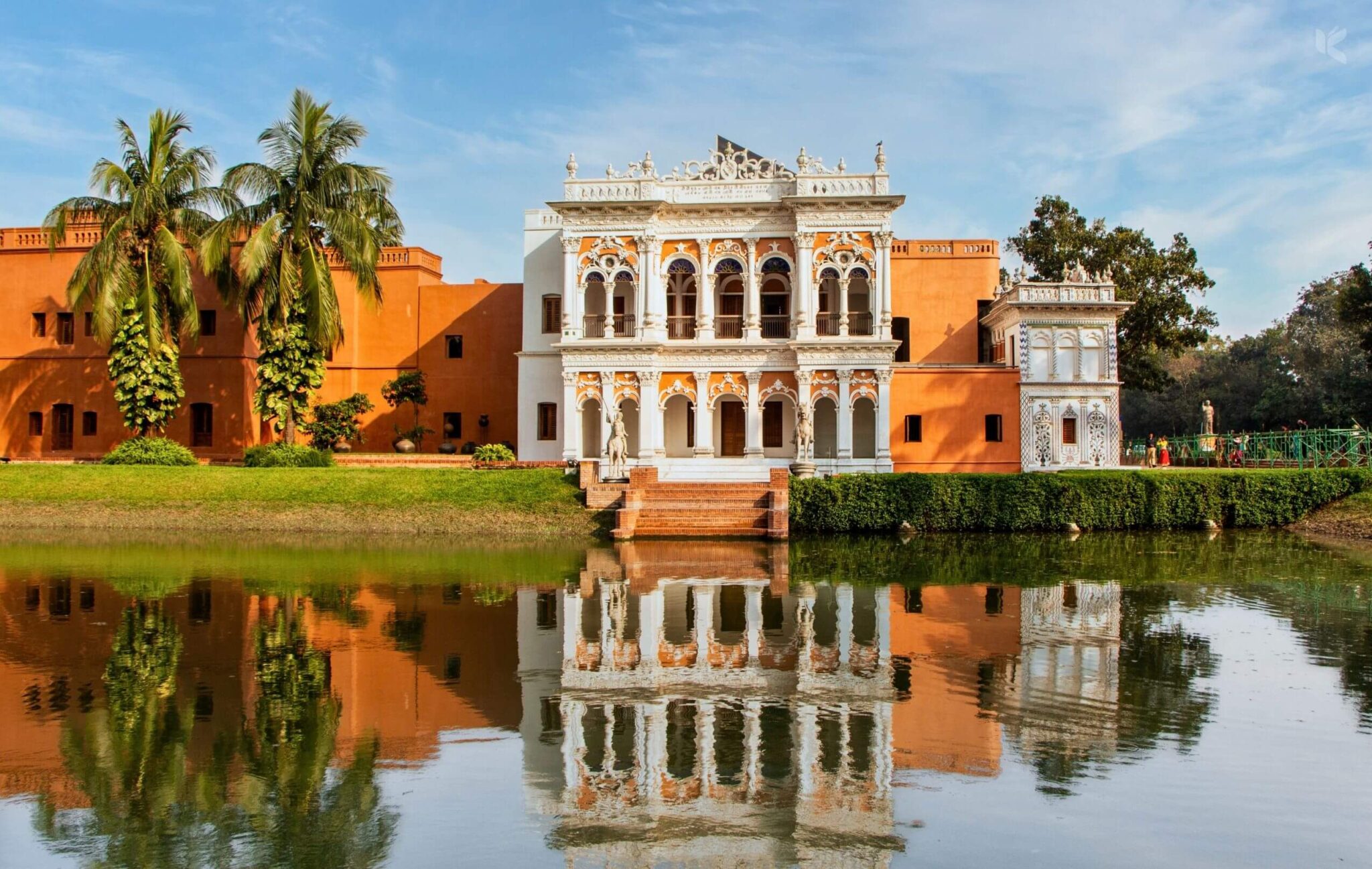
Main attractions: the Folk Art and Craft Museum, housed in a restored zamindar mansion (Panam Nagar nearby), showcases traditional Bengali crafts, textiles, and rural artifacts. Panam City itself – a row of abandoned 19th-century merchant houses along a single street – is one of the more atmospheric ruins in the country, though many of the buildings are in a fragile state and only viewable from the outside.
Best time to visit: November to February, though as a short day trip from Dhaka it’s workable for most of the year outside the heaviest monsoon weeks.
Who it’s best for: travelers based in Dhaka looking for an easy, low-commitment day trip with strong photography potential.
Kuakata
Kuakata, on the southern coast, is known locally as “Sagar Kannya,” or Daughter of the Sea, and it has one specific feature that sets it apart from Cox’s Bazar.
Why it’s worth visiting: it’s one of the few beaches in the world where visitors can watch both the sunrise and sunset over the water from the same beach, thanks to its geography along the Bay of Bengal.
Main attractions: Kuakata’s Panorama Sea Beach itself is the main event, along with a nearby Buddhist temple community and a mangrove forest patch (Fatrar Char) accessible by boat. The beach is noticeably less crowded than Cox’s Bazar, which appeals to travelers looking for a quieter coastal stop.
Best time to visit: November to February for calm seas and clear skies for both sunrise and sunset viewing.
Who it’s best for: travelers who’ve already done Cox’s Bazar and want a quieter coastal alternative, and anyone specifically chasing that sunrise-and-sunset-in-one-place experience.
Planning Tips for Traveling in Bangladesh
Domestic flights connect Dhaka to Cox’s Bazar, Sylhet, and Chittagong (the gateway to the hill tracts), which can save significant time compared to overland travel. Buses and trains cover most other routes reasonably well, though schedules and journey times can shift, so it’s worth confirming current timetables and ticket prices with official sources or a local travel agent before locking in a plan.
Weather patterns matter more here than in many destinations – the monsoon season (roughly June to September) affects road conditions in the hill tracts, boat access to the Sundarbans and Saint Martin’s, and general comfort levels almost everywhere. November through February is the most reliable stretch for most of the destinations on this list.
For the Chittagong Hill Tracts specifically (Bandarban, Rangamati, and the surrounding area), foreign travelers should check current permit requirements before traveling, as rules have changed over time and can vary by specific area within the region.
Bangladesh rewards travelers willing to look past the usual South Asia checklist. Between the coastline, the mangrove forest, the tea hills, and the Buddhist and Mughal-era ruins scattered across the country, there’s enough here for several separate trips, not just one. If any of these destinations caught your interest, Kuhudak has more in-depth guides on Bangladesh travel and beyond worth exploring next.