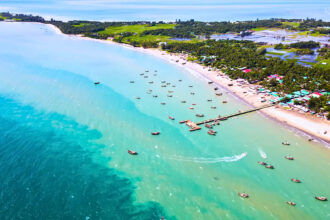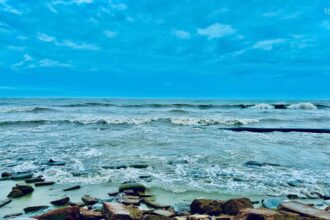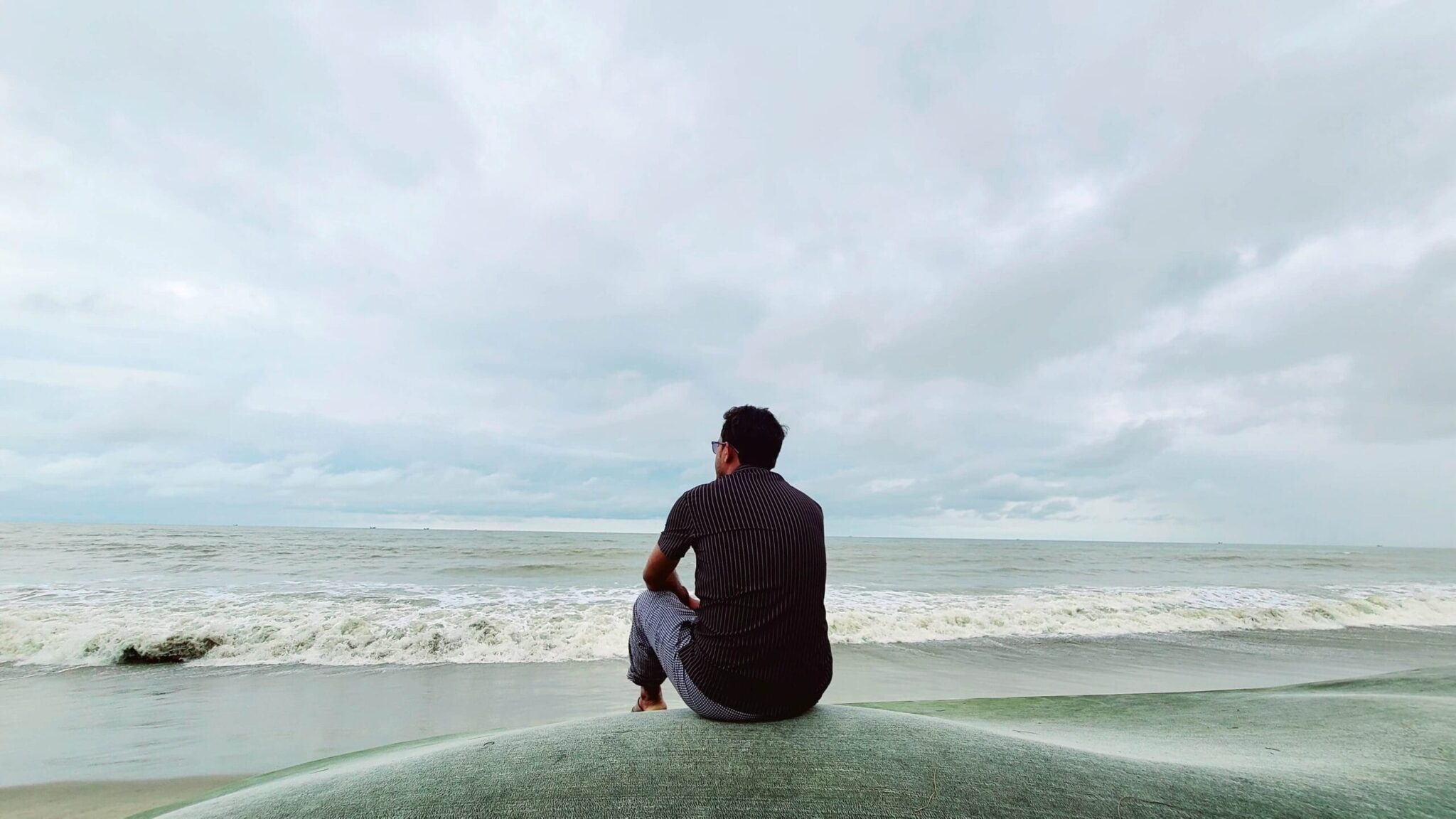
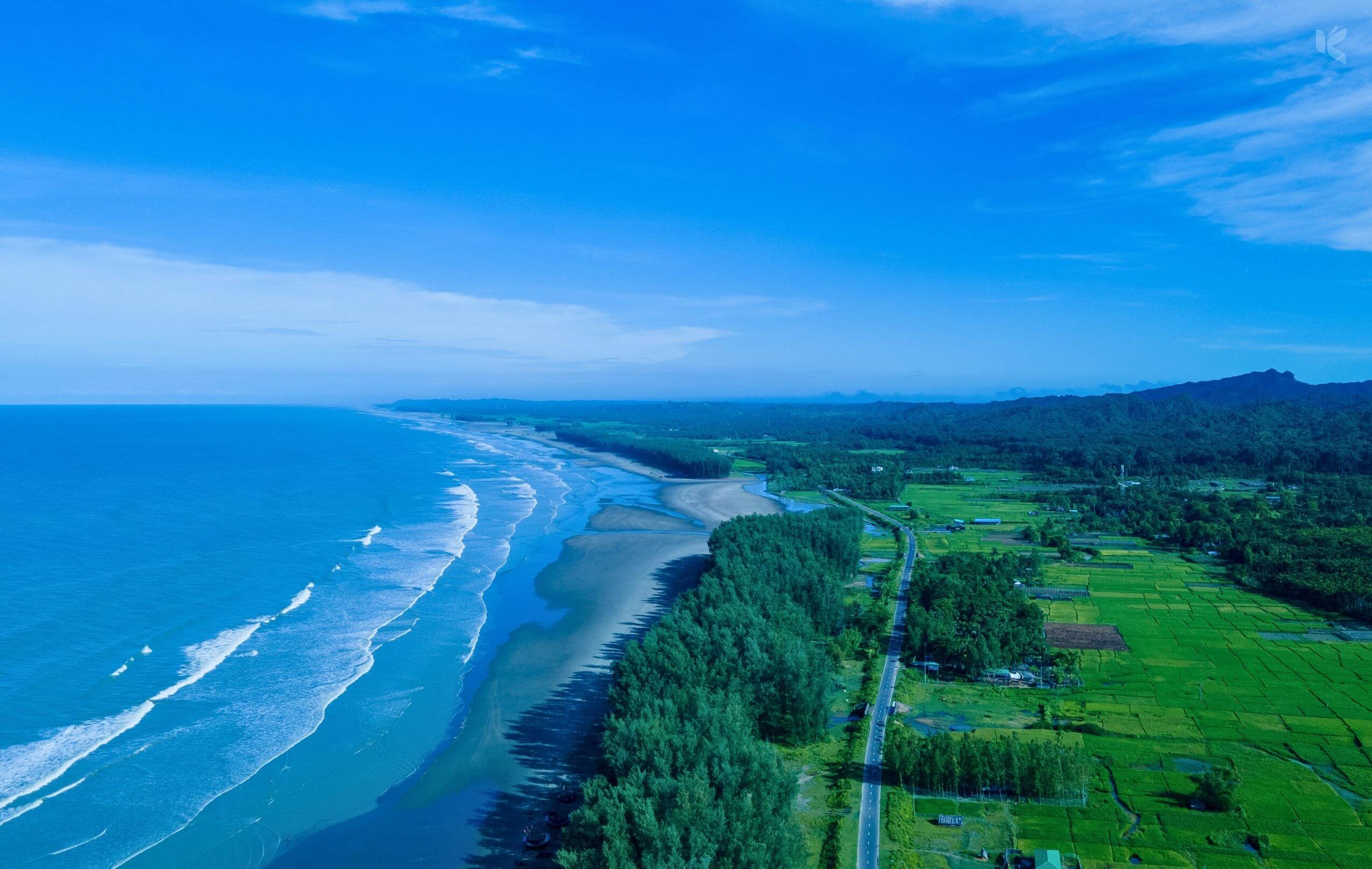
Cox’s Bazar sits on Bangladesh’s southeastern coast, facing the Bay of Bengal along a beach so long that most visitors never manage to walk its full stretch in one trip. It is widely cited as the longest natural sea beach in the world, running roughly 120 kilometers, and it remains Bangladesh’s most visited tourist destination by a wide margin.
This guide is built for travelers who want a realistic, practical picture of what a trip here actually looks like: how to get there, what things cost, where to stay, what to eat, and how to plan your days so you don’t waste them stuck in traffic or guessing where to go next. Prices, schedules, and hotel availability change often in Bangladesh, so treat every figure here as a starting point and confirm current rates before you book.
Planning your first trip to Bangladesh? See our 15 Tips for Traveling to Bangladesh
Quick Facts
| Detail | Information |
|---|---|
| Location | Cox’s Bazar District, Chittagong Division, Bangladesh |
| Beach length | About 120 km (75 miles) of unbroken sandy coastline |
| Distance from Dhaka | Roughly 400 km by road; about 55 minutes by air |
| Best time to visit | November to March (dry season) |
| Nearest airport | Cox’s Bazar Airport (CXB) |
| Currency | Bangladeshi Taka (BDT) |
| Language | Bengali (local dialect: Chittagonian); some English in hotels and tour offices |
| Ideal trip length | 3 to 5 days |
Why Visit Cox’s Bazar?
Most people come for the beach itself, and it delivers: wide, flat, golden sand that stretches further than the eye can follow, framed by low green hills on one side and the open Bay of Bengal on the other. But the district holds more than a long shoreline. Himchari’s waterfalls and forest trails sit a short ride south of town, Inani Beach offers a quieter, rockier coastline further along, and Maheshkhali Island gives you a glimpse of Bangladesh’s mangrove coast and Buddhist-Rakhine heritage.
It’s also one of the more accessible parts of Bangladesh for first-time visitors. Tourism infrastructure here – hotels, restaurants, tour operators – is more developed than almost anywhere else in the country, which makes it a sensible entry point if you’re exploring Bangladesh for the first time.
Read more: Saint Martin’s Island Travel Guide
Where is Cox’s Bazar?
Cox’s Bazar is a coastal town and district in the Chittagong Division, in the far southeast of Bangladesh, close to the Myanmar border. It sits on a narrow coastal plain between the Bay of Bengal and a range of low hills, with the Bakkhali River running through the area. The city itself is compact and walkable in parts, though the beach and outlying attractions are spread over a wide area that usually requires a vehicle.

Best Time to Visit
In short: The dry season from November to March is the best time to visit Cox’s Bazar, with December and January bringing the coolest, most comfortable weather and the biggest crowds.
Cox’s Bazar has a tropical monsoon climate with two clear seasons that matter for trip planning.
- Winter / dry season (November–March): Daytime temperatures generally sit between 20–28°C, skies are mostly clear, and the sea is calm. This is peak season, so hotel prices rise and popular spots get crowded, especially around December and January.
- Summer (March–May): Hot and increasingly humid, with daytime highs that can push past 33–34°C. Fewer tourists, softer hotel rates, but midday heat can be tough for long beach walks.
- Monsoon (June–October): Heavy rainfall, rough seas, and a real risk of cyclone activity. Several tour operators and beach activities scale back or pause entirely. Some travelers enjoy the quieter, greener atmosphere, but this is not the season for beach-focused plans.
| Season | Months | Weather | Crowd Level | Good For |
|---|---|---|---|---|
| Peak / Winter | Dec–Jan | Cool, dry, sunny | Very high | Beach days, sightseeing, photography |
| Shoulder / Dry | Nov, Feb, Mar | Mild, dry | Moderate | Same as peak, better prices |
| Summer | Apr–May | Hot, humid | Lower | Budget travel, quieter beaches |
| Monsoon | Jun–Oct | Heavy rain, rough sea | Lowest | Not recommended for beach trips |
If you want good weather without the peak-season price surge, aim for early November or late February to March.
How to Get There
Cox’s Bazar is reachable from Dhaka by air, road, or rail, and each option suits a different kind of traveler.
By air: This is the fastest option. Several airlines, including Biman Bangladesh Airlines, US-Bangla Airlines, NovoAir, and Air Astra, operate multiple daily flights between Dhaka’s Hazrat Shahjalal International Airport and Cox’s Bazar Airport (CXB), with a flight time of around 55 minutes. This is the best choice if your time is limited or you want to avoid a long overland journey.
By train: Bangladesh Railway runs the Cox’s Bazar Express (trains 813/814) directly between Dhaka and Cox’s Bazar, a route that opened in December 2023. The journey covers roughly 550 km and takes about 8 hours, with seating and sleeper options available. This is a comfortable, scenic way to travel if you have the time and want to skip the road.
By bus: Numerous AC and non-AC coaches run overnight from Dhaka’s Gabtoli and other terminals to Cox’s Bazar, typically taking 8 to 10 hours depending on traffic. This is the most budget-friendly option and useful if you want to arrive early in the morning.
By private car: The road distance is around 400 km, and the drive typically takes 8 to 10 hours depending on traffic through Chittagong. Hiring a car makes sense if you’re traveling in a group or want flexibility to stop along the way.
| Mode | Duration | Notes |
|---|---|---|
| Flight | ~55 minutes | Fastest, multiple daily departures |
| Train (Cox’s Bazar Express) | ~8 hours | Direct, seating and sleeper classes |
| Bus | 8–10 hours | Cheapest, frequent departures, mostly overnight |
| Private car | 8–10 hours | Most flexible, best for groups |
Since flight schedules, train timings, and fares change periodically, check current schedules on the airline websites or Bangladesh Railway’s e-ticketing platform before booking.
Read more: Top 25 Travel Tips Every Traveler Should Know
Transportation Inside Cox’s Bazar
Once you’re in town, getting around is straightforward but rarely metered, so agree on a price before you get in.
- CNG auto-rickshaws: The most common way to get around town and to nearby beaches. Negotiate the fare before boarding.
- Rental motorbikes and bicycles: Available near the main beach area for exploring at your own pace, particularly useful for reaching Himchari or Inani.
- Rented cars with driver: A practical option for day trips to Himchari, Inani, or Teknaf, especially for families or small groups.
- Speedboats: Needed for reaching Maheshkhali Island and other offshore points.
- Walking: The main beach strip near Sugandha and Kolatoli is walkable, and many hotels sit within easy reach of the sand.
Entry Fees
Cox’s Bazar’s main beach itself has no entry fee. Some specific attractions, such as Himchari National Park, may charge a small entry fee for the forest/waterfall area, and boat trips to Maheshkhali or Sonadia Island are priced per boat or per person by local operators. These fees change from season to season and operator to operator, so confirm the exact amount on-site or through a local guide before paying.
Top Things to Do
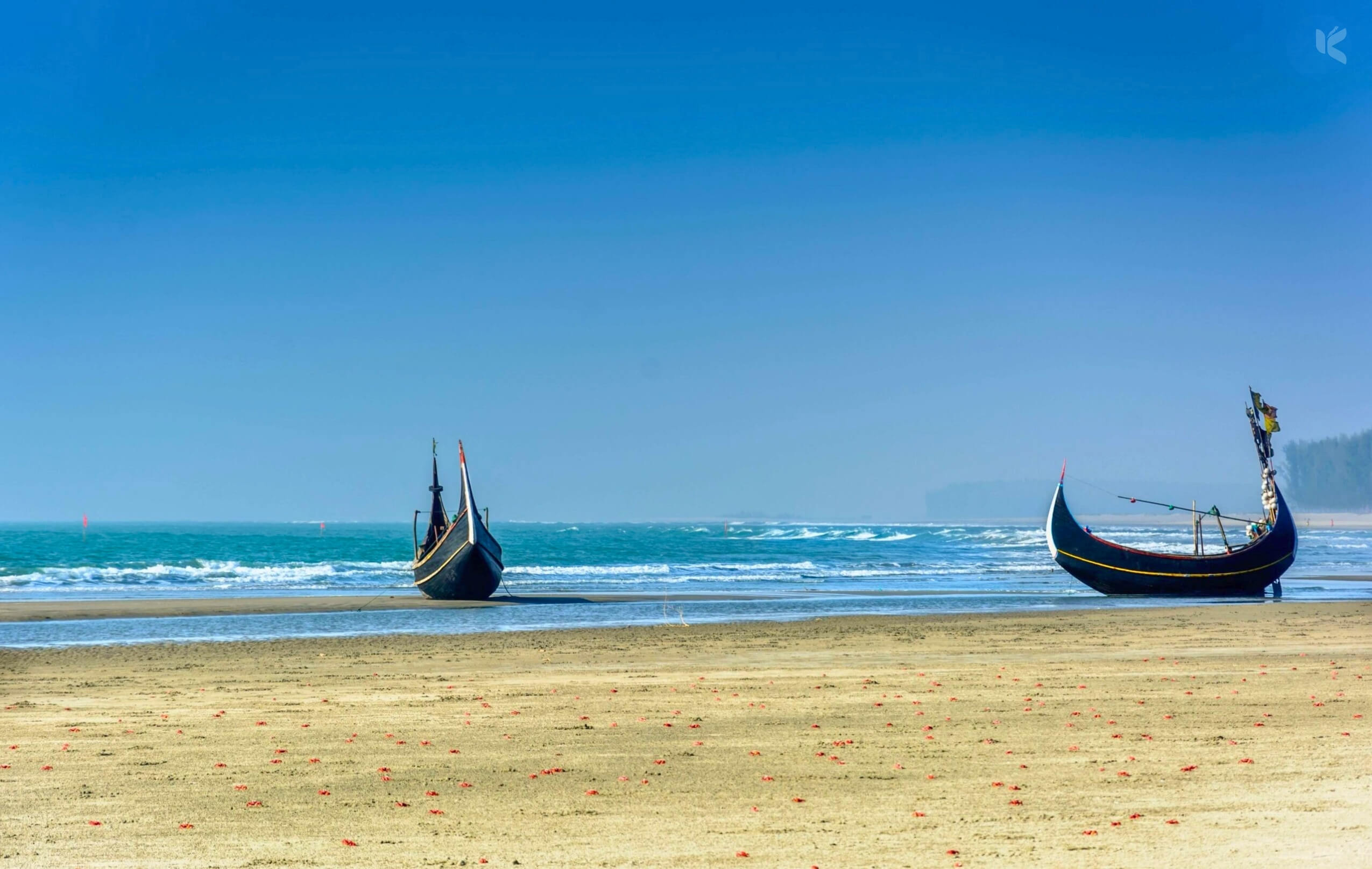
Walk the beach at sunrise or sunset. The light on the water, especially at Laboni or Kolatoli beach points, is one of the simplest and best reasons to be here.
Ride a beach bike or hire a horse. Along the main tourist stretch, three-wheeled beach bikes and horses are available for a short ride along the sand, priced per round.
Visit Himchari National Park. About 18 km south of town, Himchari combines a small waterfall (seasonal, best after monsoon) with forested hills and a scenic coastal drive to get there.
Explore Inani Beach. Roughly 30 km south, Inani is known for its coral stones and a quieter, less commercial stretch of sand compared to the main Cox’s Bazar strip.
Take a boat to Maheshkhali Island. A short speedboat ride across the channel brings you to mangrove forests, betel leaf farms, and the Adinath Temple on a hilltop.
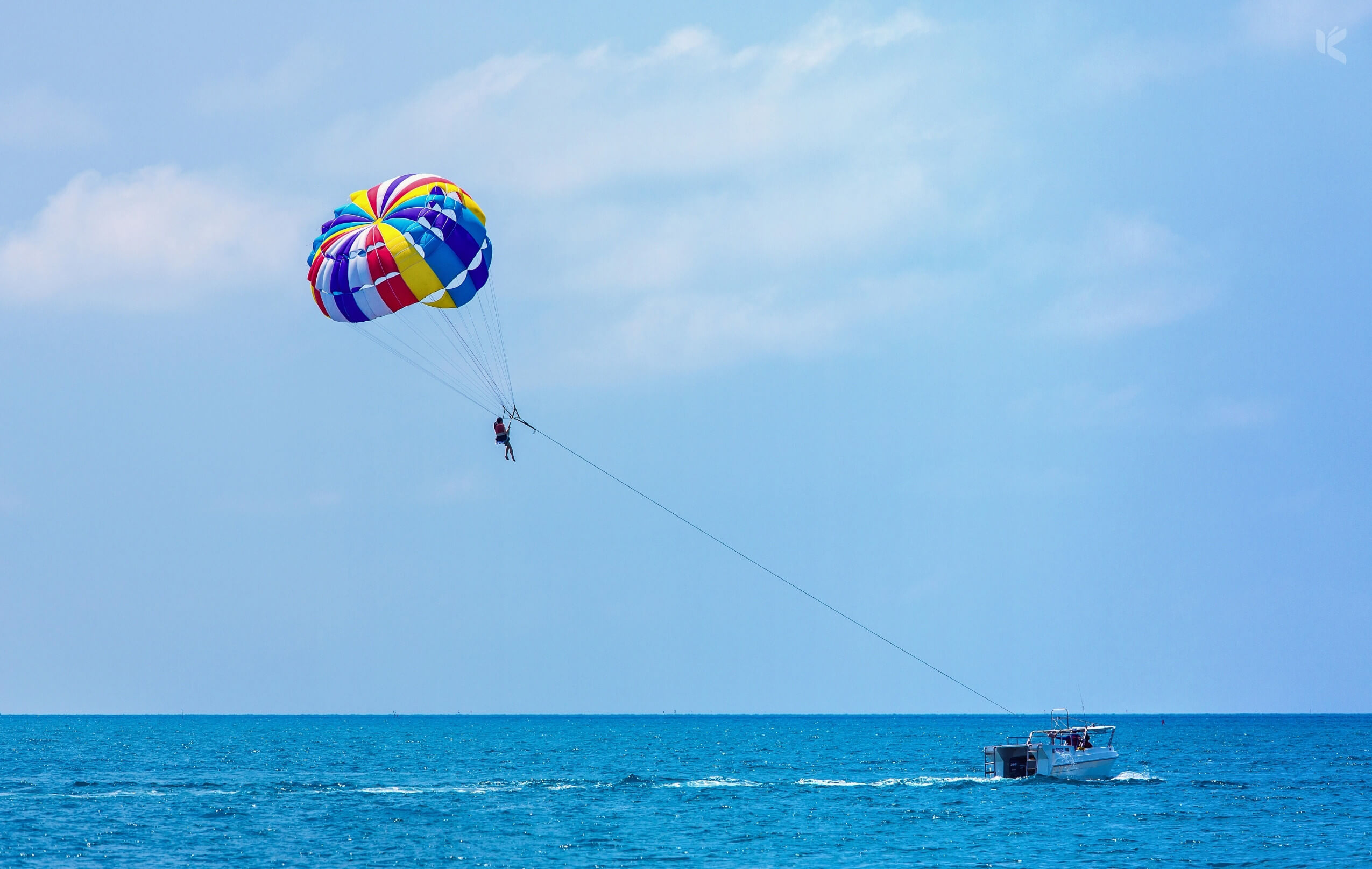
Try parasailing or jet skiing. Available seasonally along the main beach, weather and sea conditions permitting.
Visit the Buddhist temples and Burmese Market. The Aggameda Khyang and the Burmese Market in town reflect the region’s Rakhine and Buddhist heritage, alongside shops selling dry fish, shell crafts, and local textiles.
Day trip to Saint Martin’s Island. Bangladesh’s only coral island lies further south near Teknaf; reaching it typically requires an early start and a separate boat journey, and is best treated as an extended add-on rather than a single-day plan from Cox’s Bazar town.
Best Beaches
| Beach | Distance from Town | Known For |
|---|---|---|
| Laboni Beach | In town | Main access point, markets, beach bikes |
| Sugandha Beach | In town | Popular sunset spot |
| Kolatoli Beach | In town | Close to hotels, quieter than Laboni |
| Himchari Beach | ~18 km south | Waterfall, forest hills |
| Inani Beach | ~30 km south | Coral stones, calmer waters |
| Darianagar Beach | Near Himchari | Parasailing, waterway views |
Nearby Attractions
- Maheshkhali Island — mangroves, Adinath Temple, betel leaf cultivation
- Ramu — Buddhist temples and monasteries a short drive inland
- Teknaf — Bangladesh’s southernmost tip, near the Naf River and Myanmar border
- Saint Martin’s Island — coral island reachable by boat from Teknaf (seasonal, weather-dependent)
- Sonadia Island — smaller, less-visited island near Maheshkhali
Suggested 3-Day Itinerary
Day 1: Arrival and the main beach – Arrive, check in, and spend the afternoon at Laboni or Kolatoli beach. Watch the sunset from Sugandha Point, then try seafood at one of the beachfront restaurants.
Day 2: Himchari and Inani – Hire a car or CNG for a day trip south. Stop at Himchari for the waterfall and hill views, then continue to Inani Beach for a quieter stretch of coastline with coral stones. Head back into town by evening.
Day 3: Maheshkhali Island and local markets – Take a morning speedboat to Maheshkhali to see the Adinath Temple and mangrove areas. Return by early afternoon and spend your last hours browsing the Burmese Market for shell crafts and dry fish before departure.
If you have a fourth or fifth day, consider extending toward Teknaf or Saint Martin’s Island, keeping in mind that boat services to the island are seasonal and can be cancelled in rough weather.
Where to Stay
Cox’s Bazar has one of the widest ranges of accommodation in Bangladesh, from simple guesthouses to international-standard resorts, mostly clustered around Kolatoli, Laboni, and the Marine Drive area toward Inani.
Budget: Small hotels and guesthouses near Laboni Point, generally offering basic rooms with fans or AC, often within walking distance of the beach.
Mid-range: Established hotels along Kolatoli and Marine Drive with AC rooms, restaurants, and sea-view options at a moderate price point.
Luxury: International-standard hotels and resort chains along Marine Drive and Kolatoli with pools, spas, and full sea-view rooms.
Beach resorts: Properties further along Marine Drive toward Inani, offering a quieter, more secluded resort setting away from the main tourist strip.
Since room rates shift heavily with season, demand, and ongoing promotions, check current prices and availability directly with hotels or a trusted booking platform rather than relying on older figures.
Where to Eat
The beachfront strip near Laboni and Kolatoli has dozens of seafood restaurants serving fresh catch, often displayed live or on ice so you can pick your meal before it’s cooked. For a more local experience, head slightly inland to smaller Bengali and Chittagonian restaurants serving rice, curry, and regional specialties at lower prices than the tourist-facing beach spots. Street food stalls near the Burmese Market are worth a stop for quick bites and local snacks.
Read more: 10 Benefits of Traveling Alone
Local Foods to Try
- Fresh grilled or fried fish (rupchanda, coral fish, prawns)
- Shutki (dried fish) dishes, a regional specialty
- Crab curry
- Chittagonian-style beef and mezban-style curries
- Coconut-based sweets and local snacks from beachside stalls
Estimated Travel Budget
These figures are general planning ranges based on typical costs at the time of writing. Confirm current prices before your trip, since transportation, hotel, and food costs fluctuate with season and demand.
| Traveler Type | Daily Budget (approx.) | What It Covers |
|---|---|---|
| Budget Traveler | Lower range | Guesthouse stay, local food, shared transport |
| Mid-range Traveler | Moderate range | 3-star hotel, mix of local and restaurant meals, some private transport |
| Luxury Traveler | Higher range | Resort stay, restaurant dining, private car/driver, activities |
Flights from Dhaka, seasonal surcharges during peak winter, and optional activities like boat trips or parasailing will add to these baseline figures.
Packing List
- Light, breathable clothing plus a light jacket for winter evenings
- Modest swimwear or a rash guard (local beach culture is relatively conservative)
- Sunscreen, sunglasses, and a hat
- Comfortable sandals for sand and a sturdier pair of shoes for Himchari’s trails
- A dry bag for boat trips to Maheshkhali or Saint Martin’s
- Insect repellent
- A basic first-aid kit and any personal medication
Safety Tips
- Swim only in designated, lifeguard-monitored areas of the beach; currents in parts of the Bay of Bengal can be strong.
- Watch tide timings before long beach walks, especially near Himchari and Inani.
- Agree on fares with CNG and boat operators before starting a trip.
- Keep valuables secured and avoid isolated stretches of beach after dark.
- Check weather and sea conditions before booking any boat trip, particularly to Maheshkhali or Saint Martin’s Island, since services can be cancelled without much notice in rough weather.
Travel Tips
- Book flights and hotels well in advance for December–January travel, as this is peak season.
- Carry small denomination cash, since many local vendors and CNG drivers don’t accept cards.
- Learn a few basic Bengali phrases; while hotel staff often speak English, it’s less common outside tourist areas.
- Confirm boat schedules to Maheshkhali or Saint Martin’s a day ahead, since departures depend on tide and weather.
- Fridays can be busier locally due to the weekly holiday, so weekday visits tend to be calmer.
Local Culture
Cox’s Bazar blends mainstream Bengali culture with the district’s Rakhine and Chittagonian influences, visible in local Buddhist temples, the Burmese Market, and regional food traditions. Bangladesh is a majority-Muslim country, and while the beach itself is a relaxed public space, modest dress is appreciated away from the immediate shoreline, particularly in markets and residential areas.
Responsible Travel
- Avoid leaving plastic or waste on the beach; bins are limited in some stretches.
- Choose licensed tour operators and boat services, particularly for island trips, for both safety and to support properly regulated tourism.
- Be mindful when visiting Rohingya refugee camp areas near Teknaf and Ukhia; these are not tourist attractions, and visits require proper authorization.
- Support local guesthouses, seafood vendors, and craft sellers rather than only large chain properties, to help spread tourism income locally.
Frequently Asked Questions
Is Cox’s Bazar the longest beach in the world?
Cox’s Bazar is widely described as the longest natural, unbroken sea beach in the world, stretching approximately 120 kilometers along the Bay of Bengal.
How many days do I need in Cox’s Bazar?
Three to five days is generally enough to cover the main beach, Himchari, Inani, and a boat trip to Maheshkhali, with extra time if you want to extend toward Saint Martin’s Island.
Is Cox’s Bazar safe for tourists?
Cox’s Bazar is generally considered safe for both domestic and foreign tourists, with a visible tourist police presence, though standard precautions around currents, valuables, and after-dark areas still apply.
What is the best way to travel from Dhaka to Cox’s Bazar?
Flying is the fastest option at under an hour, while the Cox’s Bazar Express train and long-distance buses offer slower but cheaper overland alternatives.
Do I need a visa to visit Cox’s Bazar?
Since Cox’s Bazar is within Bangladesh, visa requirements are the same as for entering the country generally, and depend on your nationality; check Bangladesh’s immigration authority or a nearby embassy for current requirements.
Is Cox’s Bazar good for solo travelers?
Yes, the tourist infrastructure and general safety make it manageable for solo travelers, though joining a small group for island boat trips is often more convenient and economical.
What is the best time of day to visit the beach?
Early morning and late afternoon offer the most comfortable temperatures and the best light for photos, avoiding the intense midday sun.
Can I visit Saint Martin’s Island from Cox’s Bazar directly?
Boats to Saint Martin’s Island typically depart from Teknaf rather than Cox’s Bazar town, so most visitors travel to Teknaf first before boarding a boat, and this trip is seasonal and weather-dependent.
Are there ATMs and card payment options in Cox’s Bazar?
Larger hotels and some restaurants accept cards, but many local vendors, CNGs, and smaller eateries deal in cash only, so carrying Bangladeshi Taka is recommended.
Is Cox’s Bazar suitable for families with children?
Yes, the wide flat beach, range of hotels, and relatively developed tourist facilities make it a manageable destination for families, though supervision near the water is still important due to occasional strong currents.
What language do people speak in Cox’s Bazar?
Bengali is the main language, alongside the local Chittagonian dialect; English is spoken to varying degrees in hotels and tour offices but less so in local markets.
Is monsoon season worth visiting for a quieter trip?
Monsoon season (roughly June to October) brings heavy rain and rough seas, and many boat trips and water activities are suspended, so it’s better suited to travelers who specifically want a quiet, green landscape rather than a beach-focused holiday.
Final Thoughts
Cox’s Bazar rewards travelers who slow down enough to actually use its space, whether that means a long unhurried walk along the sand at sunrise, a day trip to Himchari’s hills, or an afternoon crossing to Maheshkhali by boat. It’s an easy entry point into Bangladesh’s coast, but it opens into a wider stretch of the country’s south if you have the time to keep going toward Teknaf and Saint Martin’s Island.
If you’re planning more of Bangladesh, there’s a lot more of the country’s coastline, hills, and rural heartland worth exploring on Kuhudak.